GETTING BACK TO THE LAND AT VERDANT HOLLOW FARMS
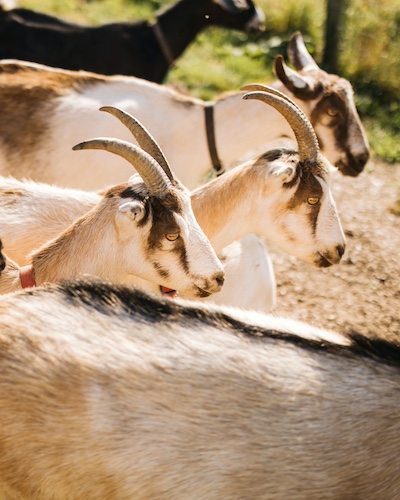
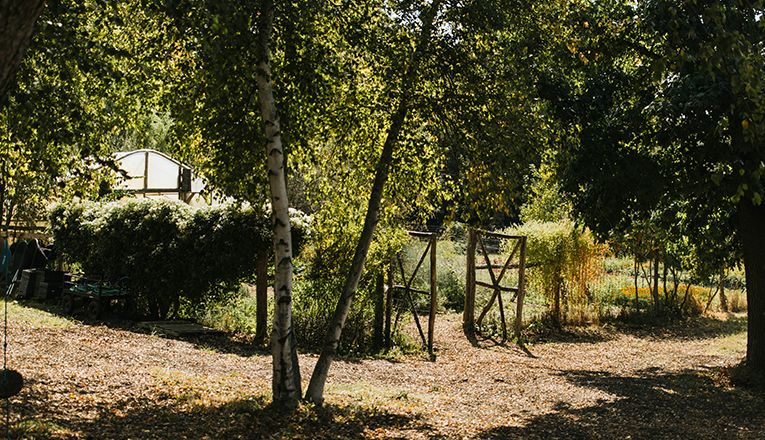
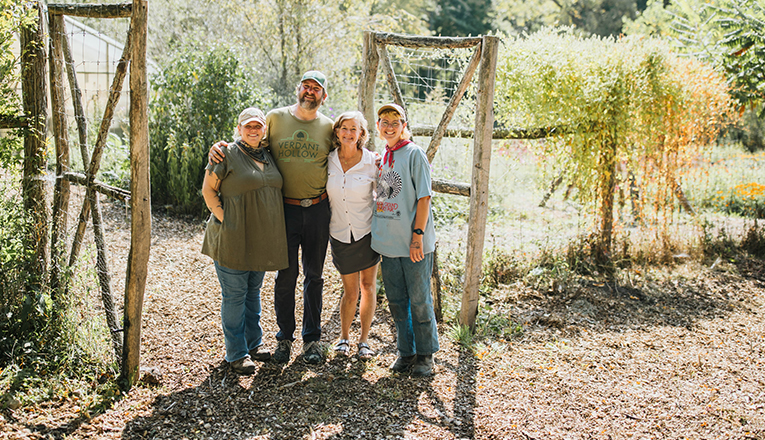
Verdant Hollow is a regenerative farm and creamery with goats, sheep, hogs, and chickens at its center—hundreds of picturesque acres that unfold as you round a wooded road in Buchanan’s wine country. Chicago expats Brett Muchow and Molly Muchow are the farm managers, leading a team of four dedicated farm and creamery hands in partnership with owner and friend Susan Flynn.
Abra Berens of Granor Farm caught up with Brett and Molly on a drizzly Tuesday morning, right after the weekly staff meeting. The big news? They finally had a robust set of walkie-talkies. From this point on, conversation ended with an enthusiastic ten-four over! Brett explained, “When your work is spread out across 225 acres with variable cell service, the ability to communicate easily is very important.”
The three chatted about learning to farm, helping people connect more deeply with the land, and why hog’s milk cheese isn’t a thing, even though it could be.
Abra Berens: Let’s talk about those 225 acres. How did you all come to this place and, as first-generation farmers, how did you come to farming in general?
Molly Muchow: Before farming, I was a personal chef in Chicago and naturally focused on sourcing and where food comes from. It didn’t take long to realize the ingredients that tasted the best were also produced in ways that were ecologically sound and beneficial to our environment and economy.
Brett Muchow: I was a teacher in Chicago and hit a crossroads where I wanted a change but knew I didn’t want to go into education administration, so we started looking at next steps for our lives holistically.
MM: It was about that time that [Susan Flynn’s] husband was tragically killed in a bike accident. I have worked for Sue since I was 23 years old, and you could feel this change, a recalibration, of what she wanted with her life. We started talking about what that would be and here we are.
AB: I didn’t realize that. It’s truly incredible to see how being confronted with loss on that scale can reorient how we want to spend our days. So you all were talking and dreaming up a farm business. How similar is Verdant Hollow today to those initial ideas?
BM: I don’t know that we had concrete ideas. So much of it was dictated by the land.
MM: Yes, we started looking for property with Sue and had a bunch of visits scheduled. We stepped foot here and literally didn’t go to another location.
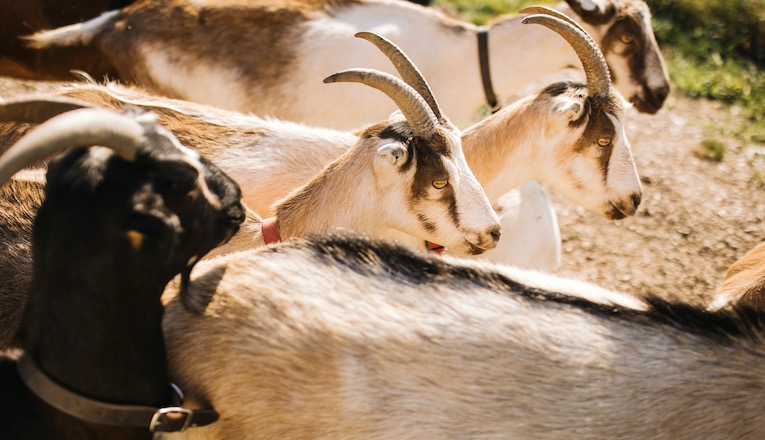
BM: Then it was working with Peter Bane and Keith Johnson [of HeartBeet Farms in Montague, Michigan]. They worked with us on a permaculture assessment, and it was clear that animals were the only real way to go. This land is varied, hilly pastures and lots of woods, and the soil was depleted. Animals are critical to relatively fast soil improvement, and we have good landscapes for goats, sheep, hogs, and chickens. That allowed us to then focus on a smaller footprint for market vegetables.
AB: I was talking recently with Jesse Rosenbluth and Sara Burns, who were the first farmers at Granor Farm, and they said they started farming with a copy of Eliot Coleman’s book, The New Organic Grower, and a notebook. How do a teacher and chef learn animal husbandry?
BM: A lot of books and YouTube University.
MM: And mistakes. There’s no such thing as perfect; there’s always an opportunity or an idea on how to do it better. We do a lot of honing. Thankfully, farming is a very intuitive thing. It often feels like it is in my DNA. I think it is in all of ours.
AB: Do you feel the same about cheesemaking?
MM: Yes, thankfully, we have years under our belts and the confidence that comes with that, including my years as a chef. I can trust what my senses are telling me and then go to experts to learn how a process can achieve the flavor or texture I want. Something I’m thinking about now is how we can continue to build relationships between other craftspeople who are doing similar work.
BM: Everything on farms is slower than you think. It takes, at minimum, a year to make real systems changes. That also means lessons are slower but more lasting. That can be aggravating in the moment, but ultimately yields better results than if we could change everything on a dime.
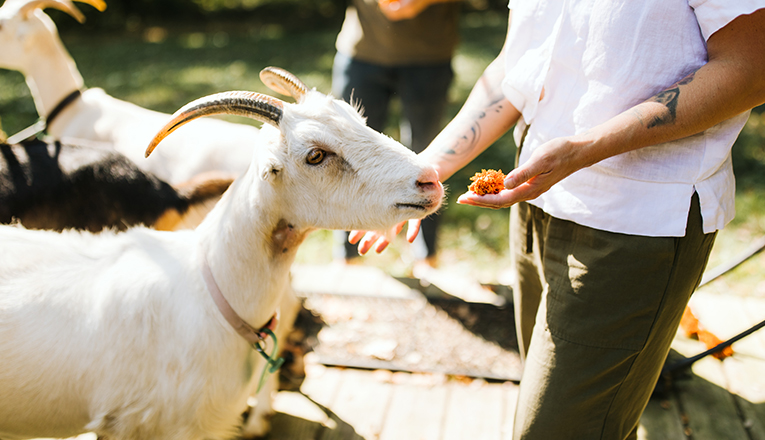
AB: My work at Granor Farm and beyond focuses on connecting consumers with producers all along the food chain because we’ve lost some of that everyday interaction. Similarly, your farm works to bring the consumer in. Why do you want folks to hike with the goats? Why is that important to your business?
MM: It’s an extension of hospitality that so many of us feel—how to share and take care of people and give them a memorable experience. Many people never interact with animals beyond pets. And honestly, it goes both ways. Brett and I lead each goat hike because that feels appropriate, and some days, frankly, I’m not that excited about it and it feels like an obligation. But every single time, I am in a better mood because of it. It reminds me to see our farm through new eyes. Plus there is still so much consumer education to do.
AB: Like what?
BM: Well, I finally feel like I understand that a hen will lay an egg every day regardless of fertilization.
AB: Right, but a goat needs to be pregnant to then be milked?
MM: Yes, a lot of people don’t make that connection. I’ve been asked why we don’t have pig cheese.
AB: I mean… why don’t we? You can milk a pig? They are mammals.
MM: Abra! Can you imagine trying to actually milk a pig? I mean, yes, you can do it, and they would train to a stanchion, but come on.
AB: It would be really hard on the knees! And the casein protein level is different right? It doesn’t coagulate the same.
MM: Yes. Let’s just say there’s a number of reasons.
AB: OK. Apart from never making hog milk cheese, do you eat what you raise?
Brett and Molly, in unison: Oh yes!
BM: Sometimes too much of it.
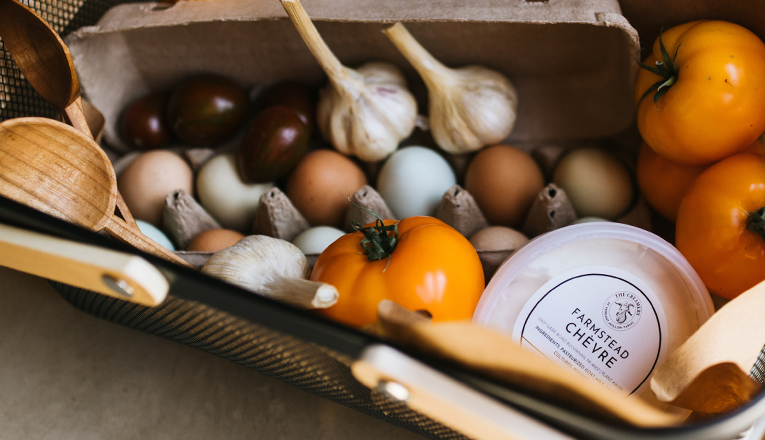
AB: Same at our house. I make a lot of meatballs with your ground pork and goat, and it’s hard to stop eating them. Your chevre has been on heavy rotation in my kitchen too. I’ve been taking it and boiling a pound of pasta, then tossing the pasta with a container of the black garlic chevre, some pasta water to make a sauce, and then finishing it with some spinach. What’s your favorite way to eat the fresh chevre right now?
MM: I just had it for breakfast, on crackers or toast with Cellar Door Artisan Preserves tomato jam. Tig, who works with me in the creamery and helps manage the animals, has been adding the chevre to scrambled eggs. It just shows up everywhere.
AB: And what about when you don’t feel like eating from your farm? You turned me on to Mr. Gyro’s in Stevensville ages ago; love that chicken pita. Where are you going out for a bite lately?
MM: [laughs] Still Mr. Gyro’s! Best fries. Honestly we don’t go out that much, but if it’s a date, we’re headed to Houndstooth in Benton Harbor. Just had a good burger at McCoy Creek Tavern in Buchanan. Love the new Viola Café in Three Oaks and Ray and Al’s in Galien, obviously.
AB: I haven’t been to McCoy’s yet but am excited to go.
MM: I’ll meet you there, and we can get a glass of wine at Stranger Wine’s new tasting room [in Buchanan].
AB: It’s a date.
BM: Can I come?
MM: [laughs] TBD, Brett.
words Abra Berens
images Jodi Bodtke
October 2025
Abra Berens is the Culinary Director at Granor Farm, an organic vegetable and grain farm in Three Oaks. A pioneer in farm-to-consumer education, Granor is also home to a farm store, distillery, schedule of cooking classes, farm camp for kids, and celebrated dining program. Every weekend, ticketed dinners feature the farm’s fresh ingredients along with produce, meat, and cheese from neighbors like Verdant Hollow.