An interview with the founder of Farmette
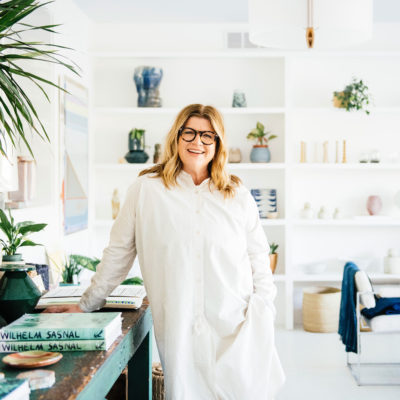
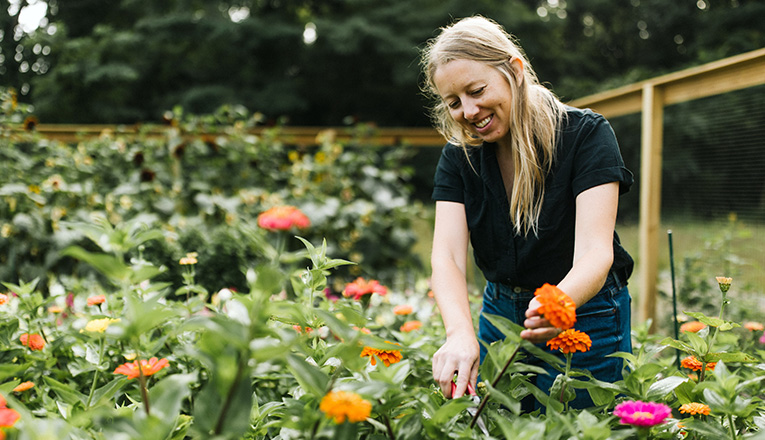
On a picturesque plot of land just outside downtown New Buffalo, Katie Burdett has built a massive following. At Farmette, she’s created one irresistible stop for sustainably sourced, small-batch provisions. On social media, her approachable gardening how-tos and shop tours rack up millions of likes.
We recently talked with Katie about how she found an enthusiastic audience for what she loves: locally grown food that’s good for the body and soul.
How did you find your way to the Lake Michigan shore?
My husband and I have been here for 11 years. Before we moved from Chicago, we spent a lot of weekends in Michigan. We loved everything about it. Especially the agricultural connections. We would drive around to the different wineries, orchards, and farm stands. Food was always the center of those weekends. And we’d spend a lot of time at the beach. Eventually we found ourselves not wanting to go back on Mondays, then finding ways to extend the weekends more and more. So we decided to make the move.
What kind of work were you doing at the time?
I took a course through the Chicago Botanic Garden, in partnership with City Colleges of Chicago, called Windy City Harvest. It was a nine-month certificate program in sustainable urban agriculture and horticulture. I completed that back in 2011, then I immediately started working with restaurants and chefs in Chicago. I partnered with Rick Bayless on his rooftop garden and greenhouse, at both his restaurants and home. Then I built a garden for Big Delicious Planet, which had a catering operation and restaurant where they would do amazing farm dinners.
How is gardening for a restaurant different from farming at a larger scale?
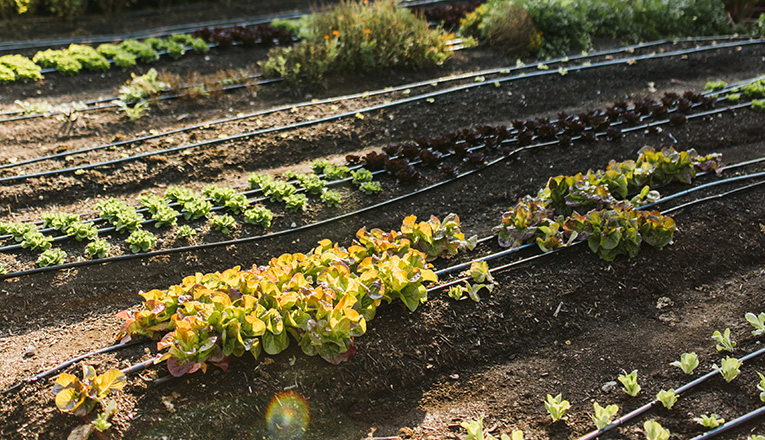
With urban agriculture, you’re using a lot of vertical space and permaculture principles, and focusing on things that can be grown in a small footprint—on balconies and up walls. Often, you’re also planting crops that don’t take as long to mature. The focus is on quick-turnaround crops like fresh greens, edible flowers, micro greens, and herbs—things that chefs have a hard time sourcing otherwise. It can make such a big difference for them to have super-fresh herbs on site instead of waiting for deliveries through a distributor.
When did you start dreaming up Farmette?
When I moved to Michigan, I worked for a local organic farm for six years. I was a farmer during the pandemic as an essential worker, and I needed a break after that. I took a little time off and indulged in some more creative pursuits to build my skill set, but also to nurture that side of myself. I consider myself a creative person, but before then I hadn’t really admitted it. I took some photography courses and learned about video editing. Then I started posting gardening tutorial videos online.
It was a way to stay active and keep myself accountable, but it was also my version of activism and environmentalism—saying ‘here’s how much food you could grow in your yard’ and showing what was possible. I also realized I really, really missed my community. So I decided to build something I wanted to see in my community.
What did you envision?
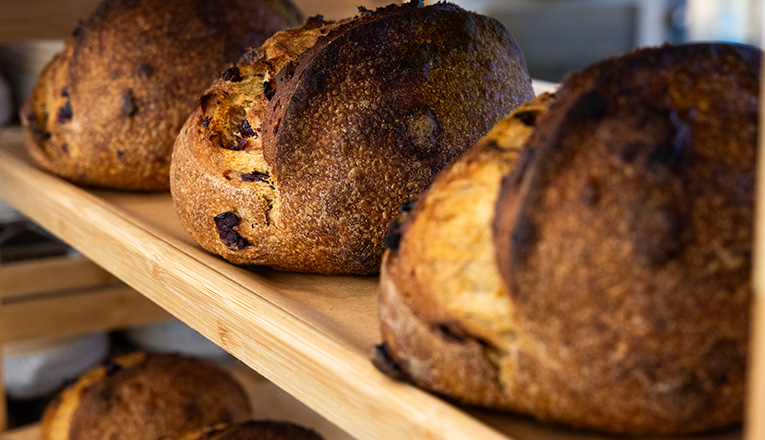
A modern version of small-scale, localized food systems that supports local farmers, but that also meets consumers where they’re at.
You have a real knack for social media. How did discovering you had an audience online overlap with what Farmette became in real life?
When I started posting gardening videos, it was an educational tool—something to express creativity in a more visual format for myself, and to allow myself to be vulnerable. I had to do a lot of emotional work to put my face online and to be comfortable with feeling completely cringe. That has not gone away, by the way. But it was an exercise to stop caring what other people thought. To do my thing and see what happened.
Just going for it gave me the confidence to open my own business. It’s normal to have some fears around rejection, like ‘Who’s going to come? Who’s going to care? Who would even think that this is a good idea?’ But because I had a following in different social channels, I had proof of concept for Farmette.
When it comes to the Farmette experience, online or IRL, what do you think people are responding to?
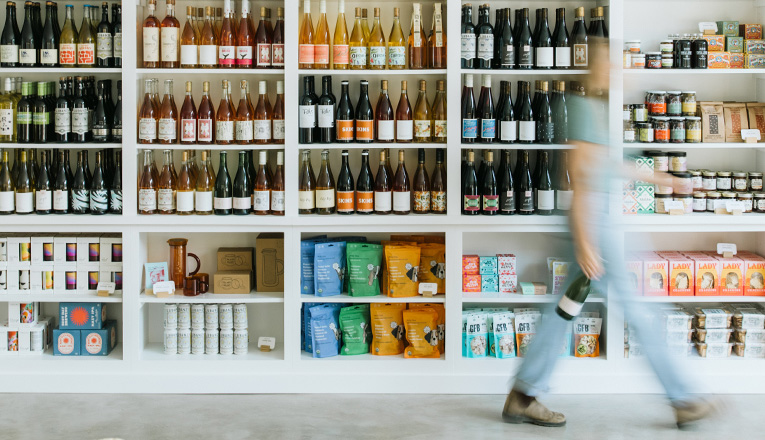
I love to put myself in the customer’s shoes, and I do it constantly. When I bring in a new product or service, I’m always asking, ‘What does it feel like?’ When you step inside Farmette, how do you feel and why? What are the things you see? When I’m making videos, I’m definitely thinking about what would make me excited to be here and interested in visiting. I’m always playing more toward the emotional component of visiting a space, especially when you’re on vacation. And of course, just being in a beautiful and calming space is part of that.
What do you hope people will feel?
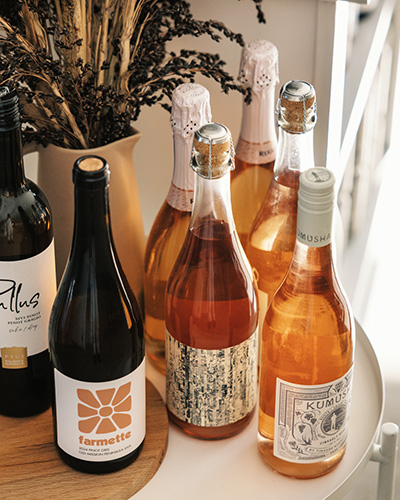
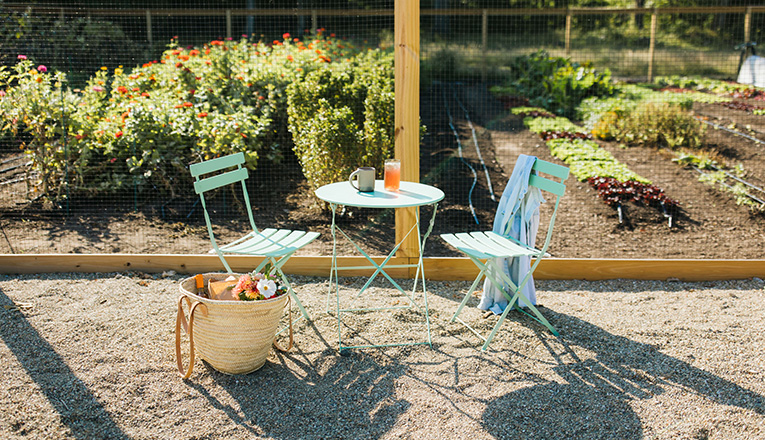
I want Farmette to be relaxing. I know that sometimes in the middle of July, when there’s a line out the door, it’s not the most relaxing feeling. But when people come in, I hope they feel calm and inspired—maybe by the beauty of local flowers, or having all these options for sustainable wines. I want people to feel inspired to make something at home or just get a cup of coffee and sit next to the garden, which is healing, I think, for a lot of people.
Farmette
18439 US-12
New Buffalo, MI 49117
words Lena Singer
images Jodi Bodtke
May 2026
Interview edited for length and clarity.